What Is Experiential Learning and Why It Matters in CBSE Schools
Ask any educator in India what the biggest shift in school teaching philosophy has been over the last decade, and most will say the same thing: the move from rote learning to experiential learning. The shift is not cosmetic. It reflects a fundamental rethinking of how children absorb information, develop skills, and build confidence — and CBSE schools at the forefront of this change are producing measurably different outcomes.
This article explains what experiential learning actually is, why it matters in a CBSE school context, how leading schools like Excellere World School in Gurugram are implementing it, and what parents should look for when evaluating whether a school's learning philosophy is genuine or merely decorative.
Table of Contents
- What Is Experiential Learning?
- Experiential Learning vs Rote Learning
- NEP 2020 and Experiential Pedagogy
- 21st Century Learning Skills
- How Experiential Learning Works in a CBSE School
- What to Look for in a CBSE School
- Excellere World School: Experiential Learning in Practice
- Why Learning Philosophy Matters
What Is Experiential Learning?
Experiential learning is a pedagogical approach in which children learn through direct experience, reflection, and application — rather than passive reception of information. The concept was developed by educational theorist David Kolb, who proposed that effective learning moves through a cycle: concrete experience → reflective observation → abstract conceptualisation → active experimentation.
In simple terms: children learn by doing, reflecting, and applying.
In the context of a CBSE school, experiential learning does not replace the CBSE curriculum. Instead, it changes how that curriculum is taught. A Class 4 student learning about ecosystems does not just read a chapter — they observe, classify, document, and perhaps build a small ecosystem model. A Class 8 student learning about fractions doesn't just solve sums; they cook a recipe that requires halving measurements, bringing mathematics into direct contact with reality.
Experiential Learning vs Rote Learning
The difference between rote learning and activity-based learning is not just about engagement. It is about the type of knowledge that results.
Rote learning produces recall. A student who has memorised the periodic table can reproduce it. But they may not understand why elements are arranged the way they are, or how to apply that arrangement to predict chemical behaviour.
Experiential learning produces understanding. A student who has conducted experiments, observed patterns, and discussed their findings with peers does not just know the answer — they understand the principle behind it. That understanding is retained longer, transfers to new problems more easily, and forms the basis of genuine intellectual confidence.
A student trained in activity-based learning during their early school years develops stronger problem-solving skills and greater confidence in unfamiliar situations.
NEP 2020 and Experiential Pedagogy
India's National Education Policy 2020 made the pedagogical shift toward experiential learning in CBSE schools explicit and mandatory. NEP 2020 calls for a reduction in curriculum load and an increase in competency-based assessment, project work, and applied learning.
CBSE responded by revising its assessment framework, introducing competency-based questions in board examinations for Classes 10 and 12, and encouraging schools to adopt activity-based learning across grade levels.
NEP 2020 experiential pedagogy reflects decades of global research confirming that children learn better, retain more, and develop stronger problem-solving capacity when they are active participants in the learning process rather than passive recipients.
21st Century Learning Skills
The phrase "21st century learning skills" appears in many school brochures. But what does it actually mean?
The globally accepted framework identifies four core competencies — often called the "4 Cs":
1. Critical Thinking
The ability to analyse information, evaluate arguments, and form independent judgements. A student who can think critically is capable of solving problems that do not have textbook answers.
2. Communication
Effective written, verbal, and visual communication. This includes the ability to listen actively, articulate reasoning clearly, and adapt communication styles for different audiences.
3. Collaboration
Working effectively in teams, managing disagreement, and contributing to shared goals. Group projects, classroom discussions, and collaborative assignments help develop this skill.
4. Creativity
Generating new ideas, making connections, and approaching familiar problems from fresh angles. Creativity is relevant across every subject — not just the arts.
How Experiential Learning Works in a CBSE School
Early Primary (Nursery – Class 2)
Young children learn primarily through their senses. An experiential learning CBSE school uses outdoor activities, storytelling sessions, role-play, sensory exploration, and hands-on materials to introduce foundational concepts.
Upper Primary (Classes 3–5)
At this stage, project-based learning becomes more structured. Students may work on interdisciplinary projects that combine science, geography, mathematics, and language learning into one integrated activity.
Middle School (Classes 6–8)
Experiential learning at the middle school level includes science experiments, debate sessions, research-based assignments, model-building, and presentations that encourage analytical thinking.
Senior Secondary (Classes 9–12)
Hands-on learning K-12 school Gurgaon models continue experiential engagement through seminars, case-study-based learning, research projects, and real-world application exercises that support conceptual understanding.
What to Look for in a CBSE School
Many schools use the language of experiential and activity-based learning in their marketing. Fewer actually implement it consistently.
Look for Flexible Learning Spaces
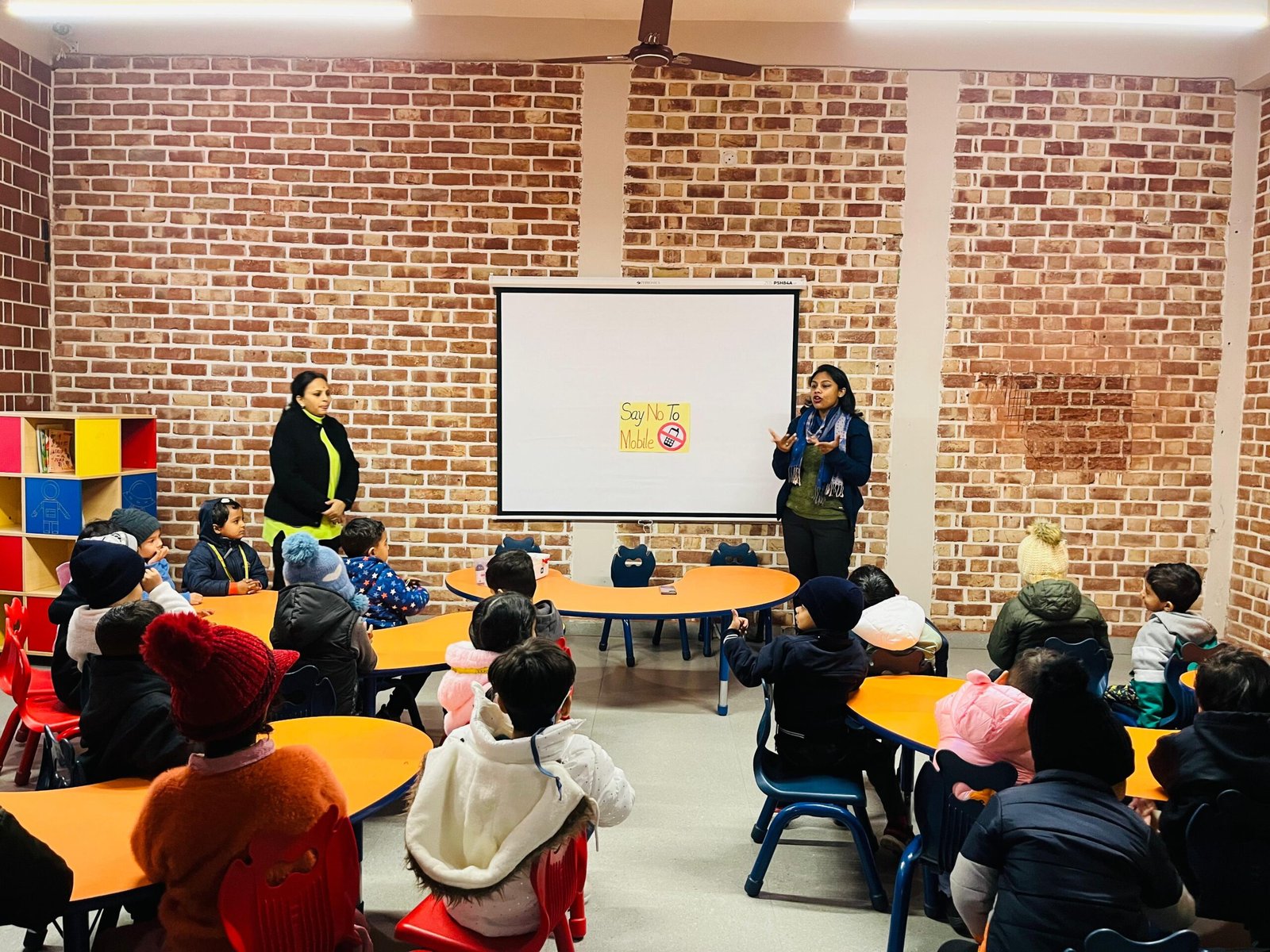
Classrooms with learning corners, student project displays, and collaborative seating often indicate a more student-centric learning environment.
Ask About Assessment Methods
A school committed to experiential learning should clearly explain how it evaluates conceptual understanding instead of relying entirely on memorisation.
Observe Teacher-Student Interaction
In an experiential classroom, teachers encourage discussion, curiosity, and problem-solving rather than one-way lectures.
Check Cross-Subject Integration
Schools implementing experiential learning effectively often connect subjects through projects and thematic learning rather than teaching every subject in isolation.
Excellere World School: Experiential Learning in Practice
At Excellere World School, Sector 99A, Gurugram, experiential learning is not a slogan — it is the structural basis of the academic programme. Described as a state-of-the-art CBSE school with a focus on 21st-century teaching and learning, life skills integration, and a customised co-curricular programme, EWS builds its curriculum around the principle that every child must be an active participant in their own learning.
The school's teaching approach combines the rigour of the CBSE curriculum with a practical, hands-on programme that enables students to take ownership of their classwork, home assignments, and assessments.
The co-curricular programme at EWS supports experiential learning beyond academics through gardening, drama, olympiad preparation, communication-focused activities, and foreign language exposure.
Why Learning Philosophy Matters
School rankings in India are often based heavily on board exam results. But rankings alone do not tell parents whether a child will enjoy learning, develop resilience, or gain the confidence to solve unfamiliar problems.
The research on experiential learning is clear: children who learn through doing, reflecting, and applying are better prepared academically and personally for future challenges.
As you evaluate CBSE schools in Gurgaon, look beyond infrastructure and marketing claims. Ask how teachers teach, how students engage with concepts, and how the school develops critical thinking and creativity. Those answers reveal far more about a school's quality than rankings ever will.
Excellere World School, Garhi Chandu Road, Sector 99A, Garhi Harsaru, near Dwarka Expressway, Gurugram — admissions open for 2026–27. Contact: +91 98118 49222 | info@ewsgurgaon.com